AI can write a 2,000-word blog post in minutes. That does not mean the post is ready to rank.
The useful tools in 2026 go much further than basic text generation. They help you research what already ranks, understand search intent, build stronger outlines, cover relevant entities and subtopics, optimize drafts, add internal links, maintain your brand voice, and increasingly prepare content for visibility in AI search results.
For this guide to the Best AI Tools for Writing SEO-Rich Blog Content, we compared ten platforms based on their SEO workflow, long-form writing capabilities, research tools, optimization features, publishing options, pricing, and public user feedback.
Important Note: an AI content writer for SEO should speed up research and drafting, not replace editorial judgment. You still need to verify claims, add first-hand expertise, remove generic sections, improve examples, and make sure the finished article genuinely answers the search query.
Here is how the ten tools compare.
Quick Picks
Best overall: Frase Strong balance of SERP research, AI writing, SEO and generative engine optimization (GEO) scoring, content optimization, monitoring, and publishing.
Best for on-page optimization: Surfer Best suited to you if content scoring, semantic coverage, and SERP-driven optimization are your priorities.
Best for one-click SEO blogging: Koala AI A strong choice when you want to move quickly from a keyword to a structured long-form article and publish it directly.
Best AI SEO Writing Tools Compared
| Rank | Tool | Best for | Starting price | Public rating |
| 1 | Frase | End-to-end SEO content workflows | $49/month | 4.8/5 (G2) |
| 2 | Surfer | SERP-driven content optimization | From $49/month billed yearly | 4.8/5 (G2) |
| 3 | Scalenut | SEO and GEO content production | $59/month | 4.7/5 (G2) |
| 4 | Writesonic | SEO content plus AI-search visibility | From $79/month billed yearly | 4.7/5 (G2) |
| 5 | Koala AI | One-click long-form SEO articles | From $9/month | 4.5/5 (Capterra) |
| 6 | Jasper | On-brand marketing content | $69/month | 4.7/5 (G2) |
| 7 | RankWell | High-volume SEO content operations | Pricing not clearly confirmed on current public page | 4.0/5 (historical Content At Scale G2 profile) |
| 8 | GravityWrite | Budget-friendly blog and creator workflows | From $8/month billed yearly | 4.5/5 (G2) |
| 9 | Copy.ai | Marketing workflow automation | $29/month | 4.4/5 (Capterra) |
| 10 | Rytr | Low-cost AI writing assistance | Free; paid from $7.50/month billed yearly | 4.7/5 (G2) |
Pricing and public rating data checked in September 2026. Plan prices, limits, and review scores can change.
1. Frase

Frase is the strongest all-round option if you want research, writing, optimization, monitoring, and publishing inside one SEO-focused workflow. You can use it to move from SERP research to a finished draft without stitching together several separate tools.
Realistic caveat: Your monthly article allowance is relatively limited on the entry plan, so higher-volume teams may need Professional or Scale.
Snapshot
- Best for: SEO teams, in-house marketers, agencies
- Known for: SERP research combined with SEO and GEO content scoring
- Popular features: AI article writing, content briefs, SEO scoring, GEO scoring, content audits, CMS publishing
- Starting price: $49/month monthly or $39/month billed yearly
- Public rating: 4.8/5 (G2)
Summary of online reviews: G2 reviewers frequently praise Frase for making keyword optimization and content research easier to manage in one interface. SEO and GEO scoring receive positive mentions, along with useful website insights and responsive support. Recent criticism includes questions about some article data accuracy and frustration from legacy users around product changes and additional subscriptions. You should still validate research rather than treating every recommendation as automatically correct.
2. Surfer

Surfer is especially useful when you already have writers or AI-generated drafts but want a stronger data layer before publishing. Its Content Editor analyzes competing pages and gives you live guidance around terms, structure, headings, coverage, and overall optimization.
Realistic caveat: Following every recommendation mechanically can make content worse, so you still need to balance the score with readability and intent.
Snapshot
- Best for: SEO writers and content optimization teams
- Known for: Content Editor and live Content Score
- Popular features: AI SEO optimization, Surfy, Content Score, internal linking, content audits, topical maps
- Starting price: From $49/month billed yearly
- Public rating: 4.8/5 (G2)
Summary of online reviews: Reviewers consistently highlight Surfer’s Content Editor as its strongest feature. Users like seeing practical recommendations for missing topics, headings, terms, and structure without performing the competitive analysis manually. Auto-optimization can also save time, although suggested changes sometimes need manual adjustment. The main practical consideration is cost if you only publish occasionally.
3. Scalenut

Scalenut combines AI writing with keyword planning, content scoring, optimization, auditing, and AI-search visibility. That makes it a useful option if you want one platform covering both article creation and the broader SEO workflow around it.
Realistic caveat: The platform now covers a lot more than writing, which can be unnecessary if you only want a simple AI blog generator.
Snapshot
- Best for: Growing content teams and agencies
- Known for: Integrated SEO, GEO, writing, and optimization workflows
- Popular features: AI articles, keyword clustering, content scoring, content audits, internal linking, WordPress publishing
- Starting price: $59/month before temporary promotional discounts
- Public rating: 4.7/5 (G2)
Summary of online reviews: G2 users regularly praise Scalenut’s ease of use, SEO recommendations, keyword research, and integrated writing workflow. Reviewers also like being able to create and optimize content without moving between several applications. Support receives positive comments. Recurring criticisms include occasional repetitive AI output and the need to manually refine some generated sections.
4.Writesonic
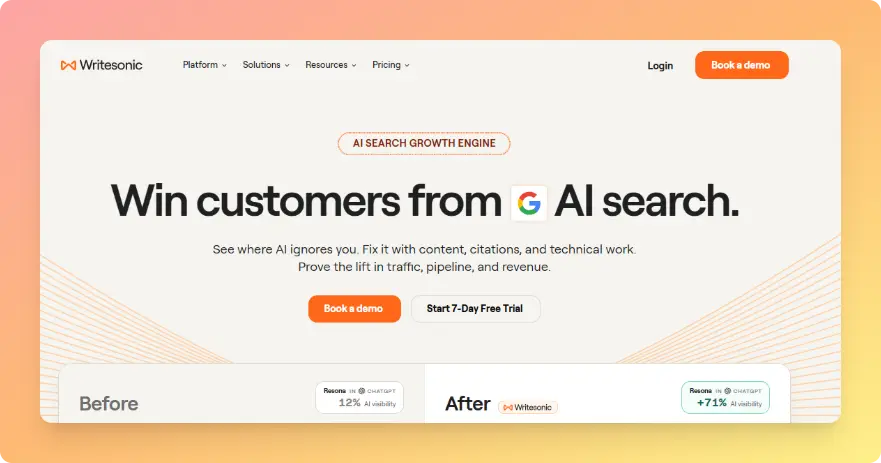
Writesonic has evolved from a straightforward AI writer into a much broader SEO and AI-search visibility platform. You can generate articles, audit content, research opportunities, monitor AI citations, and work on both traditional search visibility and GEO from the same system.
Realistic caveat: Its current pricing is much higher than the inexpensive AI-writer plans many long-time users may remember.
Snapshot
- Best for: Brands combining SEO content with GEO monitoring
- Known for: AI articles plus AI-search visibility tracking
- Popular features: AI Article Writer, SEO audits, GEO tracking, content refreshes, keyword research, AI visibility monitoring
- Starting price: From $79/month billed yearly
- Public rating: 4.7/5 (G2)
Summary of online reviews: Recent G2 feedback is particularly positive around Writesonic’s SEO and GEO capabilities. Users mention useful article generation, research, outlines, citation analysis, and visibility monitoring. The platform is increasingly attractive to teams that need more than writing alone. The trade-off is that smaller bloggers may be paying for a broader search platform when they only need article generation.
5. Koala AI

Koala AI is built around one of the simplest SEO content workflows on this list. You provide a keyword and settings, KoalaWriter researches the SERP, generates the article, adds internal links and media where appropriate, and can publish directly to your CMS.
Realistic caveat: Public feedback differs considerably between platforms, with Capterra substantially more positive than Trustpilot.
Snapshot
- Best for: Solo publishers, affiliate sites, and high-volume bloggers
- Known for: Keyword-to-article automation
- Popular features: KoalaWriter, SERP optimization, Deep Research, automatic internal links, Brand DNA, CMS publishing
- Starting price: From $9/month
- Public rating: 4.5/5 (Capterra)
Summary of online reviews: Capterra reviewers frequently praise KoalaWriter’s long-form output, structured headings, real-time information, SERP research, and ability to produce usable first drafts quickly. Its ease of use also scores well.
Trustpilot presents a more mixed picture. Its overall score is materially lower, but the sample is much smaller than Capterra’s. Complaints there focus particularly on billing, refunds, and support experiences. That difference makes it worth testing the free allowance before choosing a longer subscription.
6. Jasper

Jasper remains one of the strongest AI platforms for teams that care heavily about brand consistency. Its real advantage is not simply generating a blog post, but using stored brand voice, company knowledge, audience information, and marketing workflows to make content more consistent.
Realistic caveat: You get stronger brand controls than many competitors, but specialized SEO optimization is not as central as it is in Frase or Surfer.
Snapshot
- Best for: Marketing teams managing multiple campaigns and content types
- Known for: Brand voice and marketing-focused AI workflows
- Popular features: Canvas, Brand Voice, Knowledge assets, marketing agents, research, campaign workflows
- Starting price: $69/month or $59/month billed yearly
- Public rating: 4.7/5 (G2)
Summary of online reviews: G2 users often praise Jasper for accelerating first drafts and keeping marketing copy closer to an established brand voice. Teams also like using it across several campaign formats instead of only blog posts. A recurring theme is that prompts and settings still need refinement to produce the desired result. Some reviewers also find generated text generic until enough brand context and editing are added.
7. RankWell

RankWell is BrandWell’s SEO content system. BrandWell was previously known as Content At Scale before the company rebranded in 2024. RankWell focuses on long-form content generation, keyword research, content briefs, optimization, brand voice calibration, publishing, and programmatic SEO workflows.
Realistic caveat: Current RankWell pricing is not clearly displayed on BrandWell’s public pricing experience, and much of the independent review history still sits under the former Content At Scale name.
Snapshot
- Best for: Agencies and businesses producing SEO content at scale
- Known for: Long-form SEO automation and programmatic content
- Popular features: SEO scoring, content briefs, keyword research, optimization audits, brand voice calibration, automated publishing
- Starting price: Not clearly confirmed publicly on the current RankWell page
- Public rating: Historical 4.0/5 on G2 for Content At Scale
Summary of online reviews: Older Content At Scale reviews praise the platform’s ability to produce structured long-form articles quickly and reduce the amount of manual drafting needed. Users have also highlighted content briefs and workflow efficiency.
The review sample is small, and those reviews apply to an earlier version of the product before the BrandWell and RankWell evolution. They should therefore be treated as historical context rather than a direct measure of the current RankWell experience.
8. GravityWrite

GravityWrite gives you AI blog writing alongside a much larger collection of creator tools. It is appealing if you want articles, rewriting, images, videos, social content, and other marketing assets without subscribing to several separate platforms.
Realistic caveat: Its dedicated SEO research and competitive optimization workflow is lighter than the more SEO-specialized tools above it.
Snapshot
- Best for: Bloggers and small businesses watching costs
- Known for: Large collection of AI creation tools
- Popular features: AI Blog Generator, rewriting, SEO content templates, images, text humanizer, social tools
- Starting price: From $8/month billed yearly
- Public rating: 4.5/5 (G2)
Summary of online reviews: G2 reviewers regularly describe GravityWrite as easy to learn and useful for producing structured drafts quickly. Its templates and broad set of content tools are common positives. Users also like being able to generate blogs and other marketing assets inside the same subscription. Pricing and credit limits appear among the more common friction points, especially for lighter or price-sensitive users.
9. Copy.ai
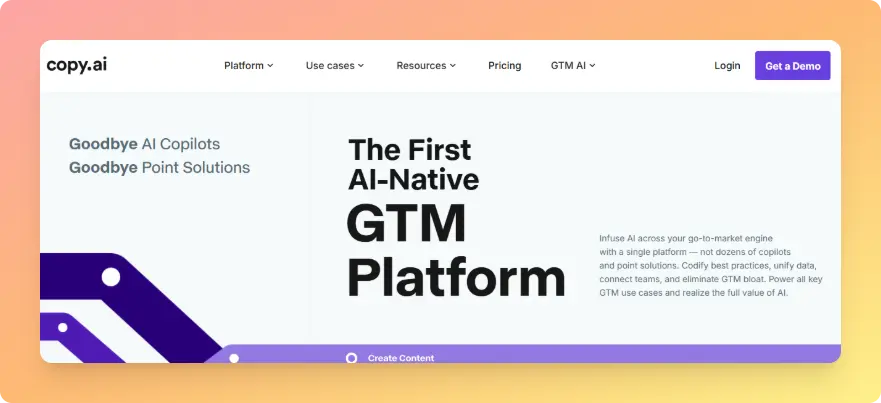
Copy.ai has moved well beyond its original identity as a simple AI copywriter. The platform now concentrates on automating broader go-to-market workflows across marketing, sales, and operations, with blog writing remaining one possible use case rather than the central product.
Realistic caveat: If your only goal is SEO blog production, much of the platform’s GTM automation functionality may be unnecessary.
Snapshot
- Best for: Marketing teams automating repeatable content workflows
- Known for: GTM workflows and AI automation
- Popular features: AI chat, workflows, Infobase, marketing automation, translations, long-form drafting
- Starting price: $29/month
- Public rating: 4.4/5 (Capterra)
Summary of online reviews: Capterra reviewers like Copy.ai for brainstorming, first drafts, templates, and its beginner-friendly interface. Users often describe it as a useful productivity tool across blogs, emails, social posts, and marketing copy.
Long-form content receives more mixed feedback, with reviewers mentioning hallucinations, generic tone, and the need for substantial editing. Copy.ai’s overall Trustpilot score is considerably lower than its Capterra rating, although relatively few Trustpilot reviews have been posted recently. That makes the overall Trustpilot score less useful as a direct measure of current product sentiment.
10.Rytr
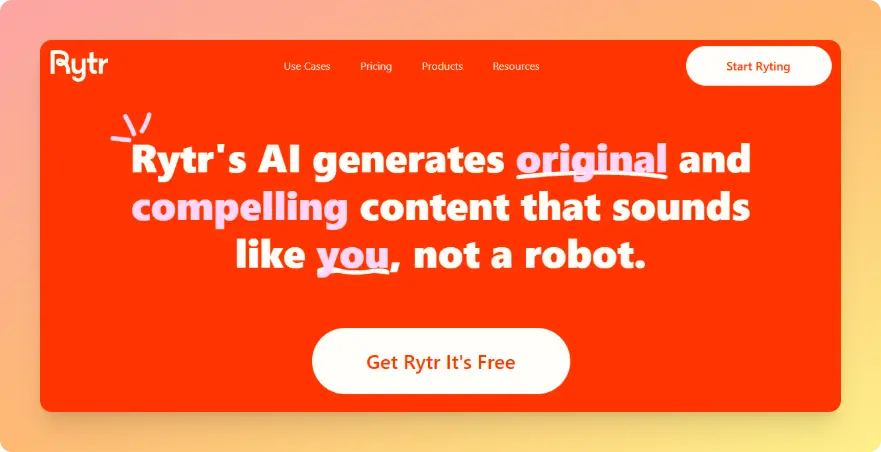
Rytr remains one of the cheapest ways to add AI-assisted writing to your workflow. It works well for generating ideas, expanding sections, rewriting copy, and producing basic first drafts without committing to an expensive SEO platform.
Realistic caveat: You will need separate SEO research and optimization tools if you want a genuinely data-driven content workflow.
Snapshot
- Best for: Freelancers and beginners on a tight budget
- Known for: Affordable AI writing assistance
- Popular features: Blog writing, rewriting, tone control, templates, plagiarism checks, multilingual writing
- Starting price: Free; paid plans from $7.50/month billed yearly
- Public rating: 4.7/5 (G2)
Summary of online reviews: Rytr receives consistently strong feedback for ease of use, templates, speed, and affordable pricing. Reviewers often use it to develop ideas or improve text rather than generate a finished article untouched. Some users specifically recommend keeping yourself involved in the writing process instead of depending entirely on automatic output. Usage limits and relatively basic long-form SEO capabilities are the main constraints.
Methodology: how these AI SEO writing tools were ranked
We ranked these ten tools specifically for producing SEO-rich blog content, not for general AI writing.
The weighted model was:
- 30% SEO research and optimization: SERP analysis, semantic recommendations, keyword coverage, content scoring, audits, and GEO features
- 25% long-form writing quality and control: outlining, article generation, editing, brand voice, research grounding, and customization
- 20% workflow depth: internal linking, content planning, collaboration, CMS publishing, refresh workflows, and automation
- 15% price and practical value: what you actually receive at the entry paid tier and how quickly usage limits force an upgrade
- 10% public user feedback: review ratings, review volume, and recurring praise and criticism on G2, Capterra, and Trustpilot
SEO capability receives the largest weight because this comparison is about the best AI SEO writing software, not simply which tool produces the smoothest prose.
That is why specialized platforms such as Frase and Surfer rank above some general AI copywriting tools with strong writing features. It is also why inexpensive tools such as Rytr do not automatically rank higher purely on price.
The final order reflects this weighted framework together with editorial evaluation of each product’s current capabilities. Public review scores were not treated as equivalent when sample sizes differed substantially, and historical reviews were discounted where a product had been renamed or materially changed.
Pricing, product features, and public review scores change regularly, so you should verify current plan limits before subscribing.