Local link building gets messy because no single tool does the whole job.
You may need one platform to find business directories, another to uncover local websites linking to competitors, and a third to manage outreach. If you work with several locations or agency clients, you also need a way to track whether local visibility improves while those campaigns are running.
That is why this list of the Best Tools for Local Link Building in 2026 includes more than traditional backlink databases.
The distinction between citation vs backlink tools matters. Citations mainly help you establish consistent business information and directory presence. Traditional backlink tools help you find editorial links, associations, sponsorship opportunities, resource pages, competitor links, local publications, and other websites that can pass authority or referral traffic.
For most serious campaigns, you will use both.
Quick Picks
- Best overall: Whitespark, for finding local citation opportunities and comparing your citation profile with local competitors.
- Best for agencies: BrightLocal, for combining citation building with local audits, ranking reports, and multi-client workflows.
- Best for local backlink prospecting: Ahrefs, for finding directories, organizations, local publications, sponsorships, and other sites already linking to competing businesses.
Best Local Link Building Tools Compared
| Rank | Tool | Best for | User rating (public reviews) |
| 1 | Whitespark | Local citation prospecting | 4.6/5 (G2) |
| 2 | BrightLocal | Citation building for agencies | 4.6/5 (G2) |
| 3 | Ahrefs | Competitor backlink prospecting | 4.5/5 (G2) |
| 4 | Semrush | All-in-one SEO and link research | 4.5/5 (G2) |
| 5 | BuzzStream | Relationship-based outreach | 4.2/5 (G2) |
| 6 | Pitchbox | High-volume link outreach | 4.7/5 (G2) |
| 7 | Moz Local | Simple listing distribution | 4.2/5 (G2) |
| 8 | Yext | Enterprise multi-location listings | 4.4/5 (G2) |
| 9 | Majestic | Backlink qualification and analysis | 4.3/5 (G2) |
| 10 | Local Falcon | Local visibility measurement | 4.7/5 (G2) |
1. Whitespark
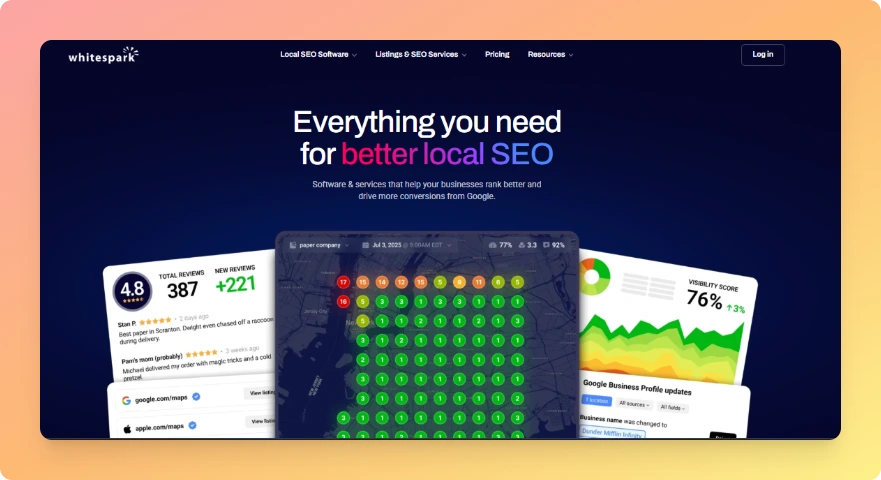
Overview: Whitespark is one of the strongest specialist options when local citations are a core part of the campaign. Its Local Citation Finder helps you uncover listings competitors already have, identify additional citation opportunities, organize prospects, and monitor citation growth without turning the job into a spreadsheet exercise.
Realistic caveat: Whitespark is much stronger at citations and local search workflows than at editorial backlink outreach.
Snapshot
- Best for: Local businesses, consultants, and agencies building citations
- Known for: Local Citation Finder and local search specialization
- Popular features: Competitor citation research, citation discovery, submission filtering, citation tracking, Local Rank Tracker
- Starting price: Local Citation Finder from $33/month when billed annually
- User rating: 4.6/5 (G2)
Whitespark lets you compare citation profiles, filter for sites where submissions may be possible, maintain a to-do list, and rerun campaigns to identify newly discovered opportunities. Its Agency plan starts at $49 per month when billed annually and supports up to 20 campaigns.
That makes it particularly useful when you need to answer a simple question: which directories and citation sources do local competitors have that you do not?
Summary of online reviews: G2 feedback is limited compared with much larger SEO platforms, but available reviews are generally positive about ease of use and citation research. Reviewers particularly value being able to compare their business with competitors without manually assembling lists.
Its narrower feature set is also its main limitation. If your strategy extends heavily into digital PR or editorial outreach, you will probably pair it with another tool.
2. BrightLocal
Overview: BrightLocal works well when you need citation building plus the reporting infrastructure to manage multiple local SEO campaigns. You can use Citation Builder without subscribing to the complete platform, which makes it flexible for both one-off campaigns and agency work.
Realistic caveat: Citation submissions cost extra even when you already pay for the broader BrightLocal platform.
Snapshot
- Best for: Agencies handling multiple local businesses
- Known for: Citation Builder, local audits, reporting, and rank tracking
- Popular features: Manual citations, citation audits, data aggregators, local rank tracking, review management, white-label reporting
- Starting price: Citations from $3.20 each, or from $2 with bulk credits; Track starts at about $41/month for one location on monthly billing
- User rating: 4.6/5 (G2)
You can use Citation Builder without buying a subscription. BrightLocal supports manual submissions across a large range of directory and niche sites, with separate aggregator options. Bulk citation credits can reduce the per-submission cost to $2.
The advantage for agencies is that citation work can sit alongside local audits, ranking reports, review monitoring, and client reporting.
Summary of online reviews: Users regularly praise BrightLocal’s dashboard, rank tracking, citation workflow, and customer support. Agency users also value having local reporting and citation work inside the same ecosystem.
Some reviewers find parts of the interface clunky, while others mention that the additional cost of citation building can push total spend higher than the headline subscription price suggests.
3. Ahrefs
Overview: Ahrefs is one of the strongest options when “local links” means more than directories. Link Intersect lets you reverse-engineer local competitors and uncover chambers of commerce, local media, suppliers, associations, sponsorship pages, directories, resource pages, and niche websites already linking to them.
Realistic caveat: Ahrefs discovers excellent prospects, but you still need a separate workflow for most outreach and citation submissions.
Snapshot
- Best for: Competitor backlink research
- Known for: Site Explorer and Link Intersect
- Popular features: Backlink analysis, Link Intersect, referring domains, link quality metrics, Batch Analysis
- Starting price: $129/month for Lite
- User rating: 4.5/5 (G2)
Ahrefs specifically recommends Link Intersect for finding competitors’ directory links, making it particularly relevant to local backlink prospecting. You can see which domains link to competing businesses but not yours, then filter the opportunities manually.
This also helps uncover opportunities beyond citations, including local associations, publishers, sponsorships, community organizations, and resource pages.
Summary of online reviews: G2 reviewers frequently praise Ahrefs for backlink research, data depth, competitive analysis, and general usability. Link builders tend to value how quickly you can move from competitor research to a shortlist of prospects.
Pricing and usage limits are recurring points of friction, particularly for smaller businesses that only need backlink research occasionally.
4. Semrush
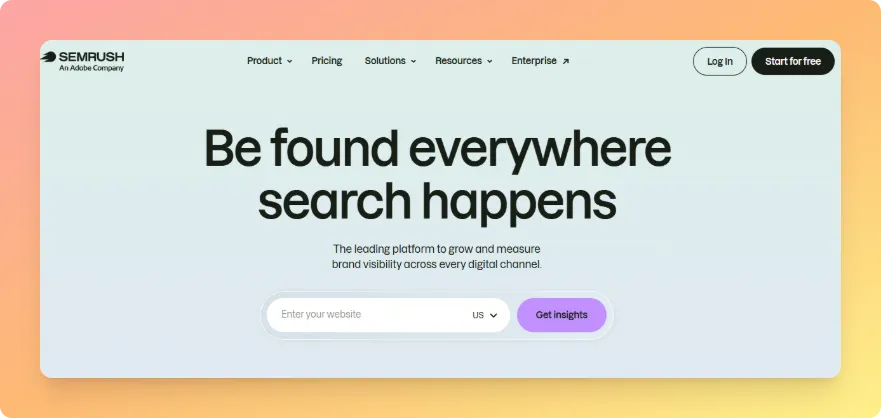
Overview: Semrush makes sense when you want local SEO and backlink prospecting under the same vendor. You can analyze competitor links, run Backlink Gap reports, manage outreach prospects, and add Semrush Local when you also need listings and Google Business Profile management.
Realistic caveat: Getting both the full SEO toolkit and advanced local functionality can become expensive compared with specialist tools.
Snapshot
- Best for: Teams wanting one broader SEO ecosystem
- Known for: Backlink Gap and integrated SEO tools
- Popular features: Backlink Gap, backlink analysis, competitor research, Link Building Tool, Local Toolkit, listing management
- Starting price: SEO Toolkit from $139.95/month; Local plans from $30/month per location
- User rating: 4.5/5 (G2)
Backlink Gap can compare several competitors and surface referring domains they have that you do not. Semrush also provides dedicated backlink analysis and local plans, with listing management available in higher Local tiers.
Its main advantage is consolidation. Keyword research, competitor analysis, backlinks, rankings, and local workflows can sit inside one platform.
Summary of online reviews: Reviewers consistently value Semrush’s breadth, competitive research, backlink tools, keyword data, and position tracking.
The most common criticism is cost, particularly once you start layering additional toolkits or local features onto the base subscription. Some new users also find the platform dense at first.
5. BuzzStream
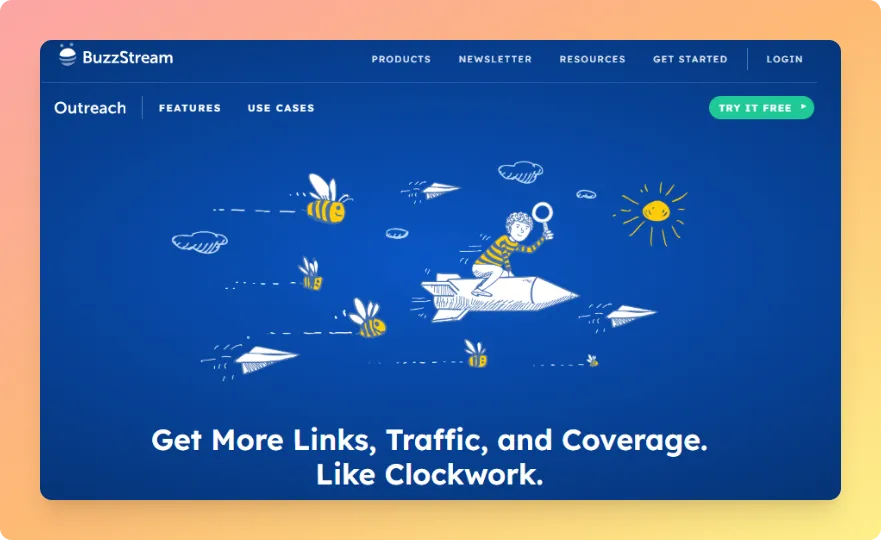
Overview: BuzzStream becomes useful after you already know who you want links from. You can research contacts, organize local publishers and organizations, send personalized outreach, automate follow-ups, and maintain relationship history across multiple campaigns and clients.
Realistic caveat: It does not replace a dedicated backlink database or citation discovery platform.
Snapshot
- Best for: Relationship-based local link outreach
- Known for: Outreach CRM
- Popular features: Contact discovery, prospect research, email templates, follow-ups, relationship tracking, link monitoring
- Starting price: $49/month for the current Starter plan
- User rating: 4.2/5 (G2)
BuzzStream combines prospect research, contact information, email outreach, campaign management, and link monitoring. That makes it particularly useful when your local strategy involves bloggers, local journalists, resource-page owners, event partners, associations, or community organizations rather than simple directory submissions.
Summary of online reviews: G2 users commonly praise BuzzStream for keeping digital PR and link-building outreach organized. Relationship history and campaign tracking are particularly useful when several people touch the same accounts.
Reviews also mention that the interface can feel dated, and you will usually need Ahrefs, Semrush, Majestic, or another data source if prospect qualification is a major part of your process.
6. Pitchbox
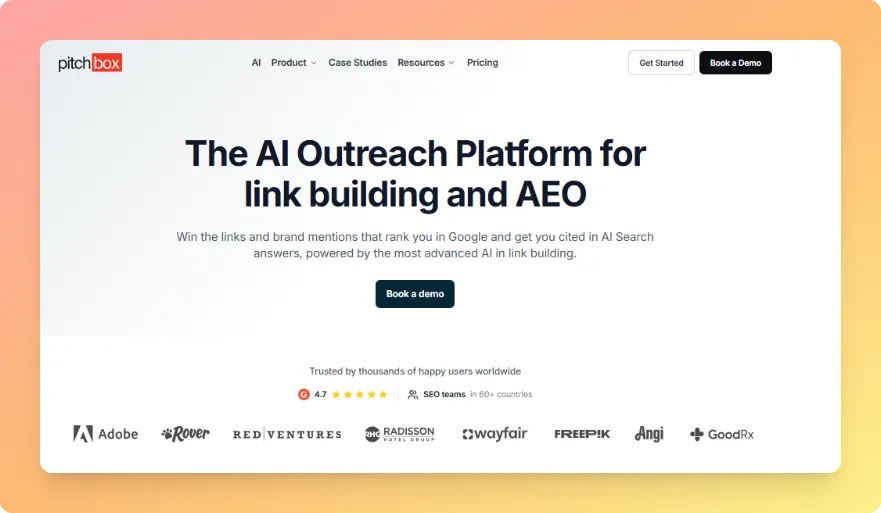
Overview: Pitchbox is built for teams that need to turn link prospecting into a repeatable production workflow. You can discover websites, find contacts, qualify prospects, personalize outreach, manage replies, and monitor links without moving every stage into separate tools.
Realistic caveat: Its pricing is difficult to justify for a small local business running occasional outreach.
Snapshot
- Best for: Agencies scaling outreach across clients
- Known for: Automated link prospecting and outreach
- Popular features: Prospect discovery, email finding, AI personalization, outreach automation, CRM, link monitoring
- Starting price: From $210/month when billed annually on the current Pro plan
- User rating: 4.7/5 (G2)
Pitchbox positions its workflow around reducing manual exports, contact research, qualification, and spreadsheet deduplication. Higher plans add more workspaces, outreach volume, users, automation, and agency-oriented controls.
Summary of online reviews: Reviewers consistently praise Pitchbox’s automation, campaign organization, and suitability for serious link-building teams. Users also like having SEO metrics close to the outreach workflow.
Pricing is the most obvious friction point, and some reviewers report issues with contact suggestions or campaign metrics. It makes more sense when outreach volume is high enough to justify the automation.
7. Moz Local
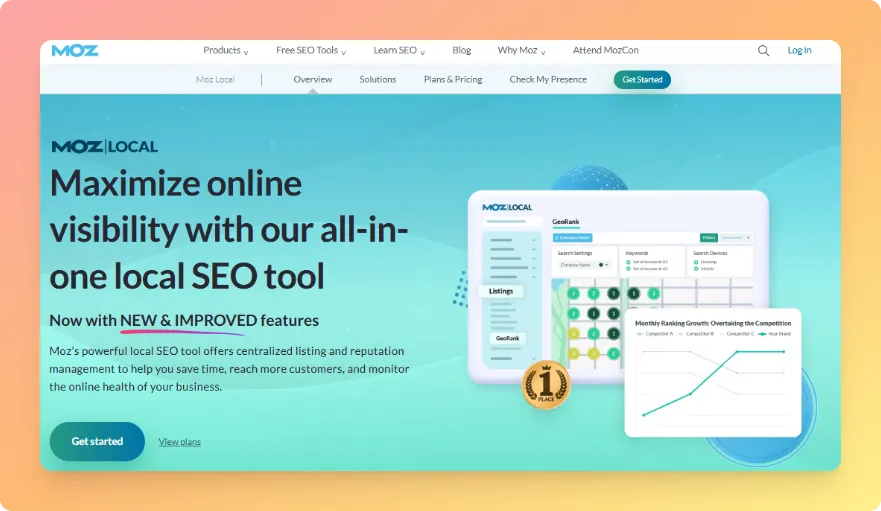
Overview: Moz Local gives you a relatively simple way to distribute and maintain business information across listing networks. It fits smaller businesses that care more about citation consistency and basic local presence than sophisticated prospect research or outreach automation.
Realistic caveat: It offers less depth for finding and earning non-directory backlinks than the tools ranked above it.
Snapshot
- Best for: Straightforward local listing management
- Known for: Business directory distribution
- Popular features: Directory management, listing monitoring, data health, review monitoring, GeoRank
- Starting price: Public G2 pricing currently shows entry-level plans from $16/month
- User rating: 4.2/5 (G2)
Its core use case remains keeping local business data distributed and consistent rather than running broader editorial link acquisition.
Because the $16 figure comes from a third-party pricing source, check Moz’s current first-party pricing before publishing or purchasing.
Summary of online reviews: Positive reviewers mention straightforward setup, usability, consolidated business profiles, and useful SEO features.
Recent critical reviews raise concerns around directory coverage, support responsiveness, and platform limitations. That mixed feedback is one reason Moz Local sits below more citation-focused options such as Whitespark and BrightLocal here.
8. Yext
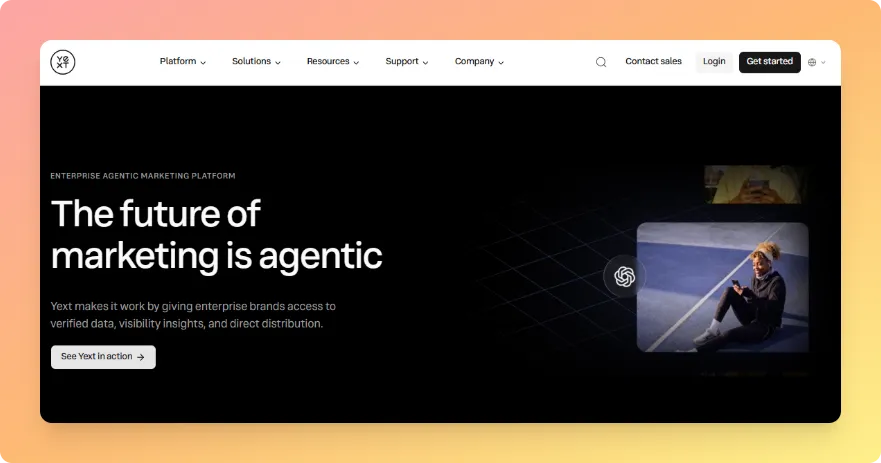
Overview: Yext is designed for brands managing business information at significant scale. If you oversee dozens, hundreds, or thousands of locations, its direct publisher integrations can centralize listings and make large-scale updates much easier than managing individual citation profiles manually.
Realistic caveat: Yext is an enterprise listings platform, not a traditional local backlink prospecting or outreach tool.
Snapshot
- Best for: Multi-location and enterprise brands
- Known for: Large-scale listings distribution
- Popular features: Publisher integrations, listing synchronization, duplicate management, analytics, role-based workflows
- Starting price: Custom quote
- User rating: 4.4/5 (G2)
Yext says its Listings product has direct connections with more than 200 publishers and supports centralized updates across large location portfolios.
That is valuable citation infrastructure, but it solves a different problem from discovering editorial links from local organizations, associations, or publications.
Summary of online reviews: Users frequently praise centralized management, time savings, listings control, and the ability to manage complex location portfolios from one system.
G2 feedback also shows recurring complaints about learning curve and navigation complexity, with some users reporting slower support or synchronization than they would like.
9. Majestic
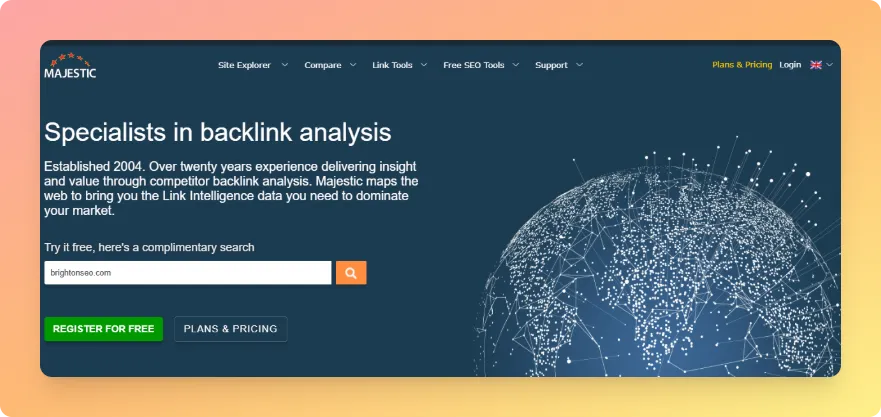
Overview: Majestic is useful when your biggest challenge is judging backlink quality rather than finding citations. Its Trust Flow, Citation Flow, Topical Trust Flow, Link Graph, and competitor tools can help you filter a messy prospect list before outreach begins.
Realistic caveat: Majestic is a backlink intelligence platform rather than a dedicated local SEO or outreach system.
Snapshot
- Best for: Qualifying local backlink opportunities
- Known for: Trust Flow and Topical Trust Flow
- Popular features: Site Explorer, Clique Hunter, Trust Flow, Topical Trust Flow, Link Graph, backlink history
- Starting price: £39.99/month for Lite
- User rating: 4.3/5 (G2)
Clique Hunter lets you compare competitor link profiles, while Topical Trust Flow provides another signal when judging whether a prospect is relevant to your niche.
That combination is useful when you already have a list of local websites and need to decide which opportunities deserve closer review.
No proprietary metric should be treated as a standalone verdict on link quality. Use Majestic’s metrics alongside manual checks of relevance, traffic, site quality, and editorial standards.
Summary of online reviews: Majestic reviewers praise its detailed backlink data, Trust Flow metrics, link graphs, and competitor analysis. Several users specifically use it to evaluate potential outreach domains.
The recurring criticism is that the interface can feel dated, while some users see the narrow backlink focus as limiting compared with all-in-one SEO suites.
10. Local Falcon
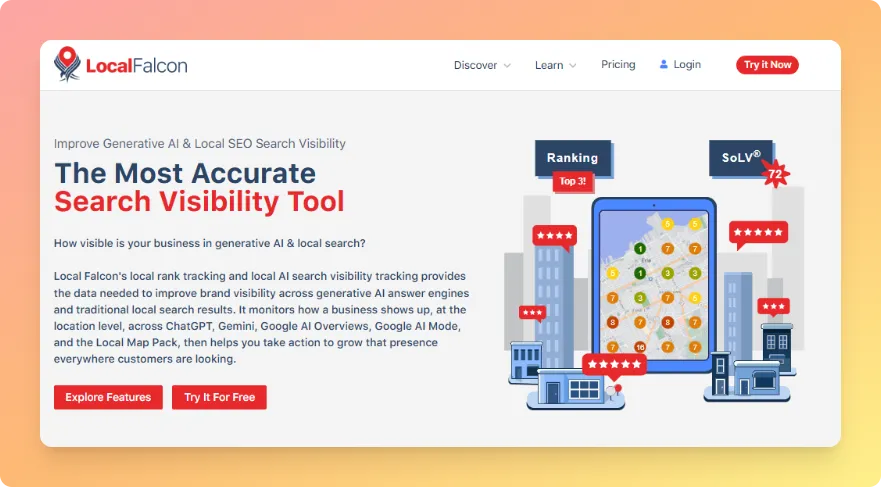
Overview: Local Falcon is primarily a measurement tool, but it earns a place because local SEO campaigns need reliable visibility tracking. Its geo-grid reports show how Google Maps rankings vary across the actual service area instead of reducing performance to one location-based ranking.
Realistic caveat: Local Falcon can show whether visibility changes while a link or citation campaign is running, but it cannot prove that backlinks caused the movement.
Snapshot
- Best for: Tracking local visibility during SEO campaigns
- Known for: Geo-grid local rank tracking
- Popular features: Map rank scans, competitor grids, AI analysis, citation discovery, reporting, scheduled scans
- Starting price: $24.99/month
- User rating: 4.7/5 (G2)
Current plans start at $24.99 per month with 7,500 monthly credits, unlimited keywords, and unlimited locations. Local Falcon’s current feature set also lists relevant-citation discovery alongside its core geo-grid and visibility-tracking capabilities.
Local visibility can change because of many factors, including Google Business Profile updates, reviews, proximity, on-site SEO, competitors, citations, links, and algorithm changes. Treat its reports as measurement rather than proof of causation.
Summary of online reviews: Reviewers repeatedly praise Local Falcon’s visual reports, ease of use, and ability to show ranking differences across a service area instead of relying on one location-based rank.
Agencies particularly like using those maps in client reporting. The main criticism is the credit system, especially when running frequent scans across many keywords and locations.
Methodology: how these tools were ranked
We ranked these tools for local link building, rather than treating this as another general list of local SEO software.
That distinction changes the order considerably. A platform can be excellent at reviews, Google Business Profile management, or map tracking and still be less useful when your immediate job is finding and acquiring local citations or backlinks.
Our weighted model was:
- 30% direct local link and citation usefulness: How directly the tool helps you find, create, manage, or earn citations and backlinks.
- 20% prospect discovery and qualification: How effectively you can identify competitor links, directories, local websites, associations, publications, and other relevant opportunities.
- 15% outreach and workflow: Whether the software helps move prospects from discovery through contact, follow-up, placement, and monitoring.
- 15% agency scalability: Multi-client organization, reporting, team access, automation, and the ability to repeat campaigns efficiently.
- 10% pricing and accessibility: Whether the cost makes sense for the job the tool performs, including the likely need for additional subscriptions.
- 10% public user feedback: Current G2 ratings and recurring review themes, with review volume considered alongside the headline score.
The weighting guides the editorial ranking rather than functioning as a claim that one tool will be the best option for every business.
It is why Whitespark and BrightLocal place ahead of larger general SEO suites. Their workflows are more directly aligned with local citation work.
Ahrefs ranks highly because competitor backlink analysis is one of the most useful ways to uncover genuine local backlink opportunities beyond directories.
BuzzStream and Pitchbox are strong outreach tools but depend more heavily on external prospect data. Yext and Moz Local are useful for listings but provide less help with editorial link acquisition. Majestic is powerful for analysis but narrower in workflow. Local Falcon is valuable for measurement, but measurement does not replace acquisition.
Public review ratings, product features, and pricing change over time. The ratings and published prices in this comparison were checked against public information available in September 2026.